
Beneficial insects, predatory mites and entomopathogenic nematodes: 37 species with their biology and release rates

Savvas Pastopoulos, Agronomist MSc, Pastopoulos Agronomics, Neos Mylotopos, Pella, Greece
Beneficial insects, predatory mites and entomopathogenic nematodes are living organisms released into a crop to eat or to parasitise the pest. They are not plant protection products. They carry no marketing authorisation number, no dose in grams and no pre-harvest interval. What they do have, and what chemical products do not, is a life cycle, and that is what decides whether a release succeeds or fails. When to release, at what temperature, at what humidity, onto which leaf surface and against which stage of the pest all follow from the biology rather than from a label. This article covers thirty-seven species available on the Greek market, with published temperature thresholds, release rates, the Greek legal framework and the documented reasons releases fail.
Release rates are given per square metre, per plant or per hectare, as the original sources give them. One hectare is 10,000 square metres and equals 10 Greek stremmata. Where a source reports a rate per acre, the acre figure is kept and the hectare equivalent is given beside it, because converting and rounding twice introduces error. Decimal points are points and thousands separators are commas throughout.
None of the thirty-seven species in this article holds an authorisation from the Greek Ministry of Rural Development and Food in the sense that a chemical product does, and none appears in the Greek plant protection product database at fyto.plantprotect.gr. That does not mean they circulate without rules. It means they fall under a different regime, set out in section 1. A preparation of beneficials in Greece carries a registration number in the national catalogue of preparations containing macro-organisms, not an authorisation number, and that is the question to put to a supplier.
- Why they hold no authorisation, and what they hold instead
- The three modes of action and why the distinction is practical
- The selection tool, by crop and by pest
- Canopy predatory mites
- Substrate predatory mites
- Predatory insects
- Parasitoid wasps
- Entomopathogenic nematodes
- Full table of species, products and suppliers
- Release rates and timing
- Compatibility with plant protection products
- Eight documented ways a release fails
- What changes under Greek conditions
- Sources
1. Why they hold no authorisation, and what they hold instead
Regulation (EC) No 1107/2009 defines a substance in Article 3 as a chemical element or compound, and a micro-organism as any microbiological entity including lower fungi and viruses. A predatory mite is neither a chemical compound nor a microbiological entity. The word macro-organism appears nowhere in the Regulation [76]. They fall outside it by definition rather than through an express exclusion, and that is why there is no active substance approval, no authorisation number, no maximum residue level and no pre-harvest interval.
This is where the usual conclusion stops, and this is exactly where it goes wrong. Greece does regulate beneficial macro-organisms, through a separate instrument. Ministerial Decision 10522/117908 of 22 September 2014 establishes a National Catalogue of Plant Protection Preparations containing Macro-organisms, and Article 2(3) expressly prohibits the production, import and placing on the market of any preparation not registered in it. Article 6(1) requires the registration number to be printed on the label, together with the species and the number of individuals [74].
A second filter matters more than the first. Articles 4(1) and 6(3) permit import only for organisms listed either on the National Catalogue of Macro-organisms or on the EPPO list [74]. The Greek catalogue currently holds fifty-three species [75], and the corresponding EPPO instrument is Standard PM 6/3, which lists agents used in the EPPO region with no adverse effects or with acceptable ones [73]. The dual wording has a practical consequence. Franklinothrips vespiformis, for instance, is not on the Greek catalogue but is in Appendix 1 of PM 6/3, so it can be imported lawfully by that second route.
Not the authorisation number, because none exists and none will. Two questions instead. First, what is the preparation's registration number in the national catalogue. Second, is the species on the Greek national catalogue or on the EPPO PM 6/3 list. If both answers are yes, the preparation circulates lawfully. If there is no registration number, marketing it is expressly prohibited by Article 2(3).
Technical evaluation of applications is carried out by the Biological Control Laboratory of the Benaki Phytopathological Institute, while the competent authority is the Directorate of Plant Produce Protection of the Ministry [74]. The same model, national registration rather than European authorisation, applies with variations across the Union, which is why a preparation lawful in Spain is not automatically lawful in Greece [78].
Nematodes
Entomopathogenic nematodes follow the same logic. A nematode is a multicellular animal and therefore not a microbiological entity under Article 3, and Greece classifies them explicitly as macro-organisms: Heterorhabditis bacteriophora, Steinernema carpocapsae, Steinernema feltiae and Steinernema kraussei each have their own entry on the national catalogue [75]. There is however one real difference. Nematodes obligatorily carry symbiotic bacteria, and for that reason several countries ask for data on the bacterium during registration, which they never do for insects and mites [78].
Organic production
Regulation (EU) 2018/848, Annex II, Part I, point 1.10.1 names protection by natural enemies as the first of the preventive plant protection measures. Point 1.10.2, which refers to the authorisation regime of Article 24, concerns products and substances. A living predator is neither. Releasing beneficial macro-organisms in an organic crop therefore requires no input authorisation and appears on no input list; it is simply a permitted and indeed prioritised cultural measure [77].
2. The three modes of action and why the distinction is practical
Dividing the agents into predators, parasitoids and entomopathogenic nematodes is not taxonomic bookkeeping. It determines three things a grower can see in the field: how many pest individuals each agent kills over its lifetime, how long before the result shows, and what exactly needs to be counted to know whether it worked.
Predators
They kill many pest individuals over their lifetime, usually as both immatures and adults. The result appears relatively quickly and monitoring is by direct observation of the predator itself. Two exceptions change everything: in the green lacewing and in both gall midges only the larva is predatory, while the adult feeds on pollen, nectar and honeydew.
Parasitoids
Each individual develops in or on a single host, which it eventually kills. The number of hosts destroyed equals the number of eggs laid, plus those the female kills by feeding on them without laying. The distinction between koinobionts and idiobionts is purely practical here. A koinobiont leaves the host alive and feeding for days, so damage does not stop at once. An idiobiont paralyses it on the spot, so damage stops at the moment of attack.
Entomopathogenic nematodes
The third-stage infective juvenile, the only free-living and non-feeding stage, enters the host and releases its symbiotic bacterium. The host usually dies within twenty-four to forty-eight hours, the nematode reproduces inside the cadaver for two or three generations, and new infective juveniles emerge to find another host. The great advantage is that they reach the stages living inside soil or wood, where no spray and no canopy predator has any access.
Above these three categories sits a fourth distinction, which describes not the organism but the strategy: conserving populations already present, classical introduction of an exotic agent for permanent establishment, and augmentative release of mass-reared individuals [80]. Augmentative biological control now offers more than two hundred commercial species worldwide, and the standing paradox of the field is that actual uptake remains far below availability [79]. Research has not stopped: recent directions concern mass rearing, compatibility between agents, and conservation of populations within the agroecosystem [81].
This article is mainly about the third strategy, with two notable exceptions. Rodolia cardinalis is already established throughout the Mediterranean and is not purchased, while Amblyseius andersoni overwinters in the leaf litter and in perennial crops can be conserved rather than bought again each year [16].
Rigorous morphological study confirmed that Chilocorus kuwanae and Chilocorus renipustulatus are the same species. For decades, therefore, releases of supposedly introduced C. kuwanae in Europe and the Caucasus were in fact releasing a native species, and did not constitute classical biological control at all [95]. The example shows how expensive a misidentification is, and why the name on the box deserves checking.
3. The selection tool, by crop and by pest
Select one crop and one or more pests, and the tool ranks the beneficial organisms by how much of the selection each one accounts for. The percentage is not a probability of success. One hundred percent means only that the species covers every pest selected at the highest available weight. Species that the producer or the literature excludes from that crop do not appear at all, and the reason is stated. The tool replaces neither an on-site assessment nor the temperature and humidity checks given on each species card.
Which beneficial organism fits
4. Canopy predatory mites
Phytoseiid mites are the most widely used group of beneficials in the world, and the choice between them rests on a classification published in 1997 that remains the working tool. The species fall into four feeding types [1]. Type I is the specialist spider mite predator, that is Phytoseiulus, which eats nothing else and does not survive without its prey. Type II is selective, preferring spider mites but tolerating pollen. Type III is generalist, taking thrips, whiteflies, eriophyids and pollen, and only this type can be established preventively, before the pest appears. Type IV feeds mainly on pollen and is not represented here.
The practical meaning is simple and not said often enough. A Type I species is curative. It goes in when the spider mite is already present, cleans up, and then dies or leaves. A Type III species is preventive. It goes in first, lives on pollen, and waits. Buying Type I for prevention is money thrown away, and buying Type III to clear an established spider mite focus is time thrown away.
The technical sheets of the four generalist species, cucumeris, swirskii, andersoni and limonicus, each independently carry the same warning: they are not to be combined with one another or with montdorensis [90]. The reason is intraguild predation, that is, they eat each other. Choose one generalist predatory mite per crop, not a mixture. The two substrate mites in the next section are the exception: they are expressly recommended together with a canopy predator, because they work on a different floor.
This is a mechanism, not a commercial caveat. The glandular trichomes of tomato do not merely impede movement, they are toxic to nymphs and adults [2]. Subtype III-b of the 2013 revision is defined precisely as those species preferring glabrous leaves with little or no trichomes [2], and that single term predicts the whole commercial pattern: excellent performance on sweet pepper and cucumber, none at all on tomato.
Phytoseiulus persimilis
Phytoseiidae. Predatory mite, spider mite specialist

Spider mites not on tomato
- Temperature
- Active from 13 to 27 degrees. Above 30 it becomes inactive, that is it stops searching and feeding.
- Relative humidity
- It requires relative humidity above 70 percent. The requirement is critical rather than merely preferable, because in drier air egg hatch is lost.
- Release rate
- From 2 to 50 individuals per square metre at each release. The range reflects the intensity of the infestation, from a preventive introduction to a curative intervention on an established focus.
- Availability and legal status
- Koppert, Bio-Insecta, Andermatt. Listed on the Greek National Catalogue of Macro-organisms.
Neoseiulus californicus
Phytoseiidae. Predatory mite, selective on spider mites

Spider mites Eriophyid and tarsonemid mites Thrips, secondary not on tomato
- Temperature
- Below 10.3 degrees development stops. Above that threshold the cycle from egg to adult requires 86.2 degree-days, that is the accumulated daily degrees in excess of 10.3. At 37.5 no egg hatches.
- Relative humidity
- It becomes sensitive once relative humidity falls below 60 percent.
- Release rate
- From 25 to 125 individuals per square metre, in at least five consecutive weekly releases. The repetition is part of the rate, not an optional reinforcement of it.
- Availability and legal status
- Koppert, Bio-Insecta, Andermatt. Listed on the Greek National Catalogue of Macro-organisms.
Neoseiulus cucumeris
Phytoseiidae. Predatory mite, generalist

Thrips Eriophyid and tarsonemid mites Spider mites, secondary Whiteflies, secondary not on tomato
- Temperature
- The producer gives 15 to 25 degrees as the effective range. Above 30 it becomes inactive.
- Relative humidity
- It requires relative humidity above 70 percent.
- Release rate
- From 50 to 100 individuals per square metre, rising to 350 at peak pressure. Whatever the number, at least 4,000 introduction points per hectare are needed, because the mite disperses slowly and coverage depends on the density of the points and not on the number of individuals alone.
- Availability and legal status
- Koppert, Bio-Insecta. Listed on the Greek National Catalogue of Macro-organisms.
Amblyseius swirskii
Phytoseiidae. Predatory mite, generalist

Thrips Whiteflies Eriophyid and tarsonemid mites Spider mites, secondary not on tomato not on cucumber and cucurbits
- Temperature
- The lower developmental threshold is 11.3 degrees, but the population does not grow below 15.5. The distance between the two figures means the mite can complete its cycle without multiplying. Development is fastest at 30.1 and the upper threshold is 37.4.
- Relative humidity
- The optimum band runs from 55 to 85 percent. Below 40 percent the eggs desiccate and are lost before hatching.
- Release rate
- From 25 to 300 individuals per square metre.
- Availability and legal status
- Koppert, Bio-Insecta, Andermatt. Listed on the Greek National Catalogue of Macro-organisms.
Amblyseius andersoni
Phytoseiidae. Predatory mite, generalist, overwintering
Eriophyid and tarsonemid mites Spider mites Thrips, secondary not on tomato
- Temperature
- At 16 degrees the eggs do not hatch. Full development is achieved from 17 to 35 degrees, fastest between 20 and 28.
- Relative humidity
- It becomes sensitive once relative humidity falls below 65 percent.
- Release rate
- From 50 to 250 individuals per square metre, in at least three consecutive weekly releases.
- Availability and legal status
- Bio-Insecta, Andermatt. Listed on the Greek National Catalogue of Macro-organisms.
Amblydromalus limonicus
Phytoseiidae. Predatory mite, generalist, cool-tolerant
Thrips Whiteflies not on tomato
- Temperature
- It tolerates lower temperatures than Amblyseius swirskii. No numerical thresholds have been published for the species, so the comparison remains qualitative.
- Relative humidity
- No humidity response curve has been published.
- Release rate
- From 50 to 250 individuals per square metre.
- Availability and legal status
- Koppert. Listed on the Greek National Catalogue of Macro-organisms.
Transeius montdorensis
Phytoseiidae. Predatory mite, generalist
Thrips Whiteflies Eriophyid and tarsonemid mites, secondary Spider mites, secondary not on tomato
- Temperature
- The lower developmental threshold lies between 10.3 and 10.7 degrees. It thrives from 20 to 30. Adults tolerate up to 45 but the eggs do not, so in a heat wave the population is interrupted at the generation rather than at the individuals already present.
- Relative humidity
- It needs relative humidity above 60 percent for the eggs to hatch.
- Release rate
- No release rate was found, either in a producer sheet or in peer-reviewed work.
- Availability and legal status
- Koppert. Listed on the Greek National Catalogue of Macro-organisms.
Sources: 73
Sources: 1 2 3 4 5 6 7 8 13 14 15 16 73 90
5. Substrate predatory mites
Thrips spend two of their stages inside the growing medium, where no canopy predator and no foliar spray reaches them. Sciarid flies spend their whole larval life there. The two substrate mites in this section cover exactly that floor, and for that reason they do not compete with the phytoseiids above but complement them.
First, Stratiolaelaps scimitus eats neither the eggs nor the pupae of sciarid flies. In a controlled study every larval instar was attacked, but egg predation was negligible and pupae were not attacked at all [9], while the producer sheet claims control of all three stages [90]. Second, it lives only in the top two and a half centimetres of the medium [12], so anything pupating deeper escapes it. The same source, which is a university publication rather than a commercial one, concludes explicitly that the species alone is usually not sufficient.
Stratiolaelaps scimitus
Laelapidae. Soil-dwelling predatory mite
Sciarid flies and thrips pupae in the substrate Thrips, secondary
- Temperature
- The lower developmental threshold lies between 10 and 12 degrees and the optimum band between 15 and 30. Below 14 activity declines. The cycle from egg to adult takes 34 days at 15 and only 10 at 28, a difference that determines how fast the population answers an infestation.
- Relative humidity
- The requirement concerns substrate moisture and not air humidity, because the mite lives inside the growing medium.
- Release rate
- From 100 to 500 individuals per square metre.
- Availability and legal status
- Koppert, Bio-Insecta. Listed on the Greek National Catalogue of Macro-organisms.
Macrocheles robustulus
Macrochelidae. Soil-dwelling predatory mite
Sciarid flies and thrips pupae in the substrate Thrips
- Temperature
- The producer gives 15 degrees as the minimum application temperature. No other thresholds have been published.
- Relative humidity
- The requirement concerns substrate moisture.
- Release rate
- From 100 to 500 individuals per square metre.
- Availability and legal status
- Koppert. Listed on the Greek National Catalogue of Macro-organisms.
6. Predatory insects
Fifteen species from seven families, with three differences that govern their use. The first is where they lay. Anthocorids and mirids insert their eggs into plant tissue, so they cannot be counted, cannot be washed off, and establishment cannot be verified by counting eggs. In Anthocoris nemoralis eggs deposited outside plant tissue simply failed to hatch [21]. Ladybirds by contrast lay in clusters on the leaf, so the eggs can be counted but can also be sprayed.
The second is which stage feeds. In ten of the fifteen species both immatures and adults are predatory. In the green lacewing and both gall midges only the larva is predatory, and the adult feeds exclusively on pollen, nectar and honeydew [85]. That changes two things in practice: a pollen source in or beside the crop is needed to retain the adults, and most lacewing adults leave the greenhouse in any case [90].
The third is photoperiod, and this is where Greek conditions differ materially from northern European ones. Section 13 covers it.
Anthocorids
Orius laevigatus
Anthocoridae. Predatory bug

Thrips Whiteflies, secondary Spider mites, secondary
- Temperature
- It performs best above 20 degrees and performance declines above 30. The cycle from egg to adult closes in 9.6 days at 26.
- Release rate
- In greenhouse sweet pepper, 2 individuals per square metre gave the same thrips control as 6. The producer gives a range of 0.5 to 10, in groups of at least 50 individuals, so that a local density sufficient for mating is formed.
- Availability and legal status
- Bio-Insecta, Andermatt. Listed on the Greek National Catalogue of Macro-organisms.
Orius majusculus
Anthocoridae. Predatory bug

Thrips Whiteflies, secondary
- Temperature
- No published temperature thresholds were found for the species.
- Release rate
- No published release rate was found for the species.
- Availability and legal status
- Bio-Insecta. Listed on the Greek National Catalogue of Macro-organisms.
Anthocoris nemoralis
Anthocoridae. Predatory bug

Pear and olive psyllids Thrips, secondary Aphids, secondary Spider mites, secondary Lepidopteran eggs (codling moth and others), secondary
- Temperature
- No published temperature threshold was found for the species.
- Release rate
- From 1,500 to 2,000 individuals per hectare, spread over two to four releases in consecutive weeks.
- Availability and legal status
- Bio-Insecta, Andermatt. Listed on the Greek National Catalogue of Macro-organisms.
Sources: 21
Miridae
Of all the agents in this list the two mirids are at once the most effective and the most hazardous. They are zoophytophagous, feeding on both insects and plant. The nymph of Macrolophus pygmaeus completes development with no prey at all, needing roughly twenty percent more degree-days, 306 to 361 instead of 253 to 280 [22]. That very capacity keeps it in the crop when no pest is present, and that very capacity lets it feed on the plant once the pest is gone.
The three values that govern use of this species come from field trials in southern Spain [25]:
- Below 0.65 individuals per leaf there is no yield reduction, whether or not whitefly is present.
- Up to 5 individuals per leaf are safe, provided more than 26 whitefly immatures per leaf are present. Abundant prey suppresses plant feeding.
- Once the predator to prey ratio exceeds 0.168, the probability of yield loss rises. Roughly, more than about one Nesidiocoris per six whitefly immatures and the crop starts paying.
The way the same paper puts the timing is the most useful guidance for a decision in the glasshouse: yield reduction occurs after the predator population peaks, once whitefly numbers have already been reduced. The crop is damaged precisely when biological control has succeeded. The success creates the failure.
The consequence for the rate is that it is set by the damage, not by the efficacy. In pre-plant release trials at 0, 0.5, 1 and 2 individuals per plant, every rate significantly reduced whitefly and gave adequate control. Only 0.5 per plant did not increase crop damage [26]. Two independent papers therefore converge on the same protocol: one individual per two plants, in the transplant trays, five days before planting out [27].
Macrolophus has the reputation of being the safer of the two, and broadly it is, but the difference is not the one usually assumed. At high density, around 23.8 individuals per plant, flower abortion reached 12.2 percent and mean fruit weight also fell, whereas with Nesidiocoris the plant compensates for flower abortion by increasing the weight of the fruits that remain [24]. That is, Macrolophus does less damage, but without compensation.
Macrolophus pygmaeus
Miridae. Zoophytophagous predatory bug


Whiteflies Tuta absoluta Spider mites, secondary Aphids, secondary
- Temperature
- The developmental threshold, measured from egg to egg and therefore for the whole generation, is 8.5 degrees. Above it the generation requires 533 to 541 degree-days to close.
- Release rate
- The published strategy is 20 adults per plant with supplementary food for six to eight weeks. The figure describes a concentrated release on a limited part of the crop and is not a rate for the whole greenhouse.
- Availability and legal status
- Bio-Insecta. Listed on the Greek National Catalogue of Macro-organisms.
Nesidiocoris tenuis
Miridae. Zoophytophagous predatory bug

Tuta absoluta Whiteflies Spider mites, secondary Aphids, secondary
- Temperature
- Generation time shows how strongly it depends on temperature: 14.9 days at 35 degrees, 21.8 at 25 and 86.7 at 15. At the low end the generation effectively does not close within the growing season.
- Release rate
- 0.5 individuals per plant, that is one individual per two plants, introduced pre-plant inside the transplant trays, five days before planting out.
- Availability and legal status
- Koppert, Bio-Insecta, Andermatt. Listed on the Greek National Catalogue of Macro-organisms.
Ladybirds
Five species with very different thermal profiles, and the difference is decisive for Greece. Adalia bipunctata does not develop at all at 35 degrees [28], while Propylea quatuordecimpunctata has an upper threshold of 36.0 degrees and the lowest thermal constant of the group at 218 degree-days [30]. In a Greek July greenhouse that difference is the difference between a population and nothing.
Adalia bipunctata
Coccinellidae. Predatory beetle, ladybird

Aphids
- Temperature
- On an aphid diet development stops below 10.06 degrees, and above that threshold the cycle requires 267.9 degree-days. Development is fastest from 23 to 27. At 35 there is no development at all, not merely a slowdown.
- Release rate
- On trees, one bag per 25 centimetres of stem diameter and up to three bags per tree. The rate scales with tree size and not with orchard area.
- Availability and legal status
- Koppert, Bio-Insecta. Listed on the Greek National Catalogue of Macro-organisms.
Propylea quatuordecimpunctata
Coccinellidae. Predatory beetle, ladybird

Aphids
- Temperature
- Development stops below 10.2 degrees and requires 218.0 degree-days above that threshold to complete the cycle. Development is fastest at 30.3 and the upper threshold is 36.0.
- Release rate
- No rate was found. The species is not widely available as a commercial product.
- Availability and legal status
- Andermatt. Not on the Greek National Catalogue of Macro-organisms; import proceeds through the EPPO PM 6/3 list.
Sources: 30
Cryptolaemus montrouzieri
Coccinellidae. Predatory beetle


Mealybugs Armoured scales, secondary
- Temperature
- Activity begins at 16 degrees and is optimal from 22 to 28. Above 33 prey searching ceases, and below 9 all activity ceases.
- Relative humidity
- The optimum band runs from 70 to 80 percent.
- Release rate
- Adults from 2 to 10 per square metre, or larvae from 5 to 40, repeated every one to two weeks.
- Availability and legal status
- Koppert, Bio-Insecta. Listed on the Greek National Catalogue of Macro-organisms.
Nephus includens
Coccinellidae. Predatory beetle
Mealybugs
- Temperature
- Development stops below 10.9 degrees and requires 472.8 to 490.5 degree-days above that threshold to close the cycle. At 10 and at 37.5 no development occurs.
- Release rate
- No commercial release protocol was found.
- Availability and legal status
- no supplier found among the three catalogues examined. Listed on the Greek National Catalogue of Macro-organisms.
Rodolia cardinalis
Coccinellidae. Predatory beetle

Icerya purchasi (cottony cushion scale)
- Temperature
- Development stops below 10.8 degrees and requires 279 degree-days above that threshold. At 34 eggs per female fall to 9.3, and at 37 none hatch.
- Release rate
- It is not sold by the unit. It is already established throughout the Mediterranean, so what is at stake is the conservation of the existing population rather than the introduction of a new one.
- Availability and legal status
- Bio-Insecta. Listed on the Greek National Catalogue of Macro-organisms.
Sources: 33
Other predatory insects
Atheta coriaria (Dalotia coriaria)
Staphylinidae. Soil-dwelling predatory beetle

Sciarid flies and thrips pupae in the substrate Thrips
- Temperature
- The cycle from egg to adult takes 17.0 days at 26 degrees and 21 days at 21.
- Relative humidity
- It tolerates a wide band, from 40 to 99 percent, and is the least demanding species in this list as regards humidity.
- Release rate
- From 1 to 5 individuals per 0.93 square metres, or 100 to 1,000 individuals per greenhouse, repeated weekly to fortnightly. The 0.93 square metre unit comes from the square foot of the American source and is kept so that the figure remains verifiable.
- Availability and legal status
- Andermatt. Listed on the Greek National Catalogue of Macro-organisms.
Chrysoperla carnea
Chrysopidae. Green lacewing, predatory neuropteran

Aphids Whiteflies, secondary Spider mites, secondary Thrips, secondary Mealybugs, secondary
- Temperature
- It needs an average of at least 12 degrees and performs best from 20 to 28. For the related Chrysoperla agilis the developmental threshold lies between 11.4 and 11.8 degrees, a value given for comparison that does not apply to carnea itself.
- Release rate
- No single rate per square metre was given. The producer adjusts the number by crop.
- Availability and legal status
- Koppert, Bio-Insecta. Listed on the Greek National Catalogue of Macro-organisms.
Aphidoletes aphidimyza
Cecidomyiidae. Predatory gall midge

Aphids
- Temperature
- It performs best from 20 to 30 degrees. For oviposition it needs a night temperature of at least 12 degrees, because egg laying takes place at night.
- Relative humidity
- It requires relative humidity above 70 percent.
- Release rate
- From 1 to 10 individuals per square metre at each release, repeated weekly.
- Availability and legal status
- Koppert, Bio-Insecta. Listed on the Greek National Catalogue of Macro-organisms.
Sources: 83
Feltiella acarisuga
Cecidomyiidae. Predatory gall midge, spider mite specialist

Spider mites
- Temperature
- It performs best from 20 to 27 degrees.
- Relative humidity
- It requires relative humidity above 80 percent and is the most demanding species in this entire list in that respect. In a heavily ventilated greenhouse that level is hard to maintain.
- Release rate
- From 0.25 to 25 individuals per square metre, in at least three consecutive weekly releases.
- Availability and legal status
- Koppert. Listed on the Greek National Catalogue of Macro-organisms.
Sources: 84
Franklinothrips vespiformis
Aeolothripidae. Predatory thrips

Thrips Leafminers (Liriomyza), secondary Whiteflies, secondary Spider mites, secondary
- Temperature
- No published biology was located for the species, so there are no temperature thresholds to give.
- Release rate
- No published release rate was found for the species.
- Availability and legal status
- Andermatt. Not on the Greek National Catalogue of Macro-organisms; import proceeds through the EPPO PM 6/3 list.
Aphidoletes aphidimyza and Feltiella acarisuga are both gall midges and in both only the larva is predatory. Yet they behave in opposite ways in autumn. In Aphidoletes, nine hours of light induce diapause in 100 percent of larvae when the night is dark [83]. In Feltiella, photoperiod alone across the whole range from sixteen to eight hours induces no diapause at all [84]. One therefore shuts down in August and the other works through almost the entire growing season. The limiting factor for Feltiella is not daylength but humidity, which must exceed 80 percent [90].
Sources: 17 18 19 20 21 22 23 24 25 26 27 28 29 30 31 32 33 34 35 36 82 83 84 85 86 87 88 89 90 91 92 94
7. Parasitoid wasps
Ten species, and three concepts a grower needs in order to use them correctly.
Koinobiont or idiobiont
A koinobiont leaves the host alive and active after oviposition. An aphid that has received an Aphidius egg keeps feeding, and if it is fourth instar or adult it keeps reproducing for two more days [90]. An idiobiont paralyses the host on the spot. Aphytis melinus injects venom that permanently arrests development of the scale [47], and Diglyphus isaea paralyses the larva inside the mine and lays beside it [50]. The difference is that in the first case damage continues for days and in the second it stops at once.
Host feeding
Many females puncture hosts and drink their fluids without laying. Those hosts die but never become mummies, so mummy counts understate the real control. In Encarsia formosa a female parasitises about five whiteflies a day and eats another three [45], so roughly a third of the kills never show up in the mummy count. In Aphytis melinus host feeding and mutilation at times kill as many scales as parasitism does [47].
There is also a case where the commercial account does not hold. Aphelinus abdominalis is often said to kill more aphids by feeding than by parasitism. In a controlled study, host-feeding mortality was under 6 percent, against 54 to 60 percent successful parasitism [43].
The mummy, that is what the grower actually counts
An Aphidius mummy is golden-brown, hard and puffy, forming 7 to 12 days after oviposition, with the adult emerging another 4 to 6 days later through a round hole at the rear. An Aphelinus mummy is black and elongate, clearly less swollen [90]. In Encarsia formosa a parasitised Trialeurodes pupa turns black while a Bemisia pupa turns brown, and the round exit hole distinguishes it from the T-shaped slit a whitefly leaves on normal emergence [45]. Diglyphus leaves no mummy at all: the mature larva leaves six black pellets that hold the two leaf surfaces apart, and those are the equivalent of a mummy [50].
The practical conclusion is that a release is not assessed earlier than ten to fourteen days. Anyone who looks on day seven will see a failure that is not there.
Aphid parasitoids
The three Aphidius species divide the work by two criteria, aphid size and temperature. colemani is for small aphids and warm periods, ervi for large ones, and matricariae for early spring and the unheated greenhouse. Under identical conditions matricariae is consistently about two days slower than colemani, but with a cooler optimum [37]. Aphelinus abdominalis covers the upper end, performing better than the Aphidius species above 28 degrees [90].
In commercial greenhouses using banker plants, secondary parasitism of mummies was below 35 percent in February, above 40 in March and April, and above 70 percent in May and June, with the telling detail that in greenhouses where control failed the rise was significantly steeper [41]. In Belgium hyperparasitism reached 42 percent in sweet pepper [42]. A mummy with an irregular or lateral exit hole, rather than the neat round one at the rear, has produced a hyperparasitoid and not a beneficial.
Aphidius colemani
Braconidae. Endoparasitoid wasp, koinobiont

Aphids not on tomato
- Temperature
- The cycle from egg to adult closes in 10.0 days at 25 degrees, and development stops below 2.97. It performs best from 20 to 25 and performance declines above 30.
- Release rate
- From 0.25 to 4 individuals per square metre, in at least three consecutive releases.
- Availability and legal status
- Koppert, Bio-Insecta. Listed on the Greek National Catalogue of Macro-organisms.
Aphidius ervi
Braconidae. Endoparasitoid wasp, koinobiont

Aphids not on tomato
- Temperature
- From oviposition to adult there are 12.1 days at 25 degrees and 25.0 days at 15. Development stops below 5.98, and above that threshold the cycle requires 229.73 degree-days to close.
- Release rate
- From 0.25 to 2 individuals per square metre, repeated weekly and begun preventively from planting.
- Availability and legal status
- Koppert, Bio-Insecta. Listed on the Greek National Catalogue of Macro-organisms.
Aphidius matricariae
Braconidae. Endoparasitoid wasp, koinobiont
Aphids not on tomato
- Temperature
- The cycle from egg to adult closes in 11.9 days at 25 degrees, and development stops below 3.37. It performs best from 15 to 25, that is in a cooler band than colemani, and performance declines above 28.
- Release rate
- From 0.25 to 4 individuals per square metre, in at least three consecutive releases.
- Availability and legal status
- Koppert. Listed on the Greek National Catalogue of Macro-organisms.
Sources: 37
Aphelinus abdominalis
Aphelinidae. Endoparasitoid wasp
Aphids
- Temperature
- It remains effective from 15 to 35 degrees, and above 28 it performs better than the species of the genus Aphidius.
- Release rate
- From 0.25 to 4 individuals per square metre, concentrated on infestation hotspots.
- Availability and legal status
- Koppert. Listed on the Greek National Catalogue of Macro-organisms.
Sources: 43
Whitefly parasitoids
The choice between the two is purely thermal and there is a number for it. The developmental threshold of Eretmocerus eremicus is 13.0 degrees, the highest of the aphelinids, while that of Encarsia formosa is 8.1 to 11.5 depending on strain. At 15 degrees Eretmocerus needs 79.3 days and Encarsia 48. At 32 degrees both converge on 14 days [46]. Encarsia is therefore the cool choice and Eretmocerus the warm one, and that is a measured quantity rather than commercial positioning.
Encarsia formosa
Aphelinidae. Endoparasitoid wasp, thelytokous

Whiteflies
- Temperature
- It performs best from 20 to 25 degrees and becomes insufficient once the 24-hour average falls below 17. It additionally needs a photoperiod of at least 12 hours, so temperature on its own is not a sufficient criterion.
- Relative humidity
- It operates from 50 to 80 percent relative humidity.
- Release rate
- From 1 to 10 individuals per square metre, preventively and repeated until control is achieved.
- Availability and legal status
- Koppert. Listed on the Greek National Catalogue of Macro-organisms.
Eretmocerus eremicus
Aphelinidae. Parasitoid wasp, first ecto then endo
Whiteflies
- Temperature
- Development stops below 13.0 degrees, the highest threshold among the aphelinids in this list. It needs at least 20 degrees to perform and remains active above 30.
- Release rate
- From 1 to 10 individuals per square metre, in at least three consecutive weekly releases.
- Availability and legal status
- Koppert, Bio-Insecta. Listed on the Greek National Catalogue of Macro-organisms.
Sources: 46
Scale and mealybug parasitoids
Anagyrus vladimiri was formally described only in 2019. All earlier literature and much of the labelling use the names Anagyrus pseudococci or Anagyrus sp. near pseudococci, and refer to the same insect [48]. True A. pseudococci remains a valid but different species. The Greek national catalogue still carries the entry under the older name [75].
Aphytis melinus
Aphelinidae. Ectoparasitoid wasp, idiobiont
Armoured scales
- Temperature
- Development stops below 9.7 degrees, the upper threshold is 30.0, and between them the cycle requires 226.5 degree-days to close.
- Release rate
- In orchards converting to integrated management, 100,000 individuals per 4,047 square metres per year, roughly 247,000 per hectare, with individual releases of 5,000 to 10,000 per 4,047 square metres every two weeks. In southern California and in coastal areas, where natural populations are higher, the requirement falls to 10,000 to 40,000 per 4,047 square metres per year, roughly 24,700 to 98,800 per hectare. The 4,047 square metre unit is the acre of the American source and is kept so that the figure remains verifiable.
- Availability and legal status
- no supplier found among the three catalogues examined. Listed on the Greek National Catalogue of Macro-organisms.
Anagyrus vladimiri
Encyrtidae. Endoparasitoid wasp
Mealybugs
- Temperature
- It remains viable from 14 to 34 degrees, with an optimum around 25. At 35 development ceases and at 40 the temperature is lethal. The dependence shows in the length of the cycle: 79.3 days at 14 and only 10.5 at 34.
- Release rate
- From 0.1 to 0.5 individuals per square metre, in at least three releases one to two weeks apart.
- Availability and legal status
- Koppert. Listed on the Greek National Catalogue of Macro-organisms.
Leafminer and egg parasitoids
Trichogramma achaeae is the only agent in this whole list that kills the pest before any damage occurs, because it attacks the egg. That carries a cost: the release must be synchronised with moth oviposition rather than with the calendar, because as the host egg ages the chorion hardens and parasitism falls clearly [55]. Standard practice in trials is eggs younger than twenty-four hours, which is why the published protocol is two releases a week and not one [53].
Parasitoids developing on Tuta absoluta in tomato emerge with lower parasitism rates, wing deformations and shorter lifespans, and that generation contributes little to control [54]. In practice the control comes almost entirely from the released individuals and not from their offspring. Repetition is not optional, it is how the method works, and this is consistently missing from commercial material.
Diglyphus isaea
Eulophidae. Ectoparasitoid wasp, idiobiont

Leafminers (Liriomyza)
- Temperature
- The cycle from egg to adult takes about 10 days at 25 degrees and 27 days at 15. Development stops below 9.2 and above that threshold it requires 161.8 degree-days.
- Release rate
- From 0.25 to 3 individuals per square metre, in at least three consecutive weekly releases.
- Availability and legal status
- Koppert. Listed on the Greek National Catalogue of Macro-organisms.
Trichogramma achaeae
Trichogrammatidae. Egg parasitoid wasp
Lepidopteran eggs (codling moth and others) Tuta absoluta
- Temperature
- Development stops below 10.51 degrees and requires 138.27 degree-days above that threshold to close the cycle. The net reproductive rate, that is female offspring per female per generation, peaks at 20. At 35 no viable progeny are produced.
- Release rate
- Eight releases of 50 adults per square metre, twice weekly, gave 85.63 percent parasitism in an early infestation. A single release of 100 individuals per square metre under high pressure gave 91.03 percent.
- Availability and legal status
- Andermatt. Listed on the Greek National Catalogue of Macro-organisms.
Sources: 37 38 39 40 41 42 43 44 45 46 47 48 49 50 51 52 53 54 55 75 90 93
8. Entomopathogenic nematodes
Three species, and the choice between them is governed not by the pest but by two other things: soil temperature and foraging strategy.
Ambusher or cruiser
Steinernema carpocapsae is an ambusher. It stands upright on its tail near the soil surface and attaches to passing hosts. It therefore reaches mobile, surface-active insects, the caterpillars, crickets and borers, and almost never reaches the sedentary larvae of the deeper soil. Heterorhabditis bacteriophora is a cruiser. It moves actively through the medium and finds exactly those sedentary root feeders that the ambusher never meets. It is also the only one of the three that bores directly through the host cuticle with a dorsal tooth rather than entering only through natural openings. Steinernema feltiae sits between the two.
S. feltiae infects and establishes from 8 to 30 degrees and reproduces from 10 to 25, while S. carpocapsae reproduces from 20 to 30 [56]. In strictly practical terms: in an autumn application against overwintering codling moth larvae, S. feltiae gave 90 percent mortality in October while S. carpocapsae gave only 58 [58]. At 10 degrees carpocapsae kills nothing at all [59]. feltiae is the cold species, carpocapsae the warm one, and bacteriophora loses performance below 20.
At 85 percent relative humidity, S. feltiae and H. bacteriophora die completely within two hours, while more than 80 percent of S. carpocapsae survive [60]. Ultraviolet radiation compounds this: direct sunlight reduced pathogenicity by 6.9 percent at thirty minutes and by 94.9 percent at sixty [61]. Application is therefore always in the late afternoon or evening, with spray water below 25 degrees, pH between 4 and 8, no filters finer than 0.3 millimetres and nozzles of at least 0.5 millimetres [90].
Steinernema feltiae
Steinernematidae. Entomopathogenic nematode, symbiont Xenorhabdus bovienii

Sciarid flies and thrips pupae in the substrate Overwintering codling moth larvae in the soil Thrips Leafminers (Liriomyza) Capnodis (stone fruit flatheaded borer) Tuta absoluta, secondary
- Temperature
- It infects and establishes from 8 to 30 degrees, but reproduces only from 10 to 25. At 30 infectivity is lost and at 28 no progeny are produced. The host dies in 12 days at 8 degrees and in 2 days at 25.
- Relative humidity
- It needs a moist but not saturated substrate, because the nematode moves in the water film around the particles and under saturation oxygen is lacking.
- Release rate
- From 250,000 to 500,000 infective juveniles per square metre for soil application, and from 1 to 3 million per litre of spray for foliar application.
- Availability and legal status
- Koppert, Bio-Insecta, Andermatt. Listed on the Greek National Catalogue of Macro-organisms.
Steinernema carpocapsae
Steinernematidae. Entomopathogenic nematode, symbiont Xenorhabdus nematophila

Red palm weevil Capnodis (stone fruit flatheaded borer) Overwintering codling moth larvae in the soil Lepidopteran eggs (codling moth and others) Tuta absoluta
- Temperature
- It reproduces from 20 to 30 degrees and is most effective from 22 to 28. At 10 degrees it causes no codling moth mortality at all.
- Relative humidity
- It needs wetting in order to move, yet it is the most desiccation-tolerant of the three species in this list.
- Release rate
- In soil it is applied at the same orders of magnitude as Steinernema feltiae. For palms the figures are 5 to 20 litres per palm, or 1 million juveniles per litre of spray.
- Availability and legal status
- Koppert, Bio-Insecta, Andermatt. Listed on the Greek National Catalogue of Macro-organisms.
Heterorhabditis bacteriophora
Heterorhabditidae. Entomopathogenic nematode, symbiont Photorhabdus

Vine weevils and root-feeding chafer grubs Capnodis (stone fruit flatheaded borer) Sciarid flies and thrips pupae in the substrate, secondary Tuta absoluta, secondary
- Temperature
- The producer gives it as active from 16 to 35 degrees, with an optimum from 19 to 33. Performance falls below 20, which makes it the warm-adapted species of the three.
- Relative humidity
- It is strictly a soil species and does not tolerate desiccation.
- Release rate
- From 250,000 to 500,000 infective juveniles per square metre.
- Availability and legal status
- Koppert, Bio-Insecta. Listed on the Greek National Catalogue of Macro-organisms.
The growing medium matters more than is usually suspected. Across seven soils, infectivity of H. bacteriophora was highest in potting medium and lowest in acidic sand, while its persistence was shortest precisely where infectivity was greatest. The authors warn explicitly against generalising soil effects from one species to another [62].
Sources: 56 57 58 59 60 61 62 63 64 65 66 72 90
9. Full table of species, products and suppliers
The table brings together all thirty-seven species. Suppliers are taken from the catalogues of Koppert Greece, Bio-Insecta and Andermatt Hellas as they stood in September 2026. The catalogue column shows whether the species appears on the Greek National Catalogue of Macro-organisms [75]. The search filters scientific name, family, target and supplier at the same time.
| Species | Group | Family | Main targets | Suppliers | Greek national list |
|---|---|---|---|---|---|
| Amblydromalus limonicus | Canopy predatory mite | Phytoseiidae | Thrips, Whiteflies | Koppert | Yes |
| Amblyseius andersoni | Canopy predatory mite | Phytoseiidae | Eriophyid and tarsonemid mites, Spider mites | Bio-Insecta, Andermatt | Yes |
| Amblyseius swirskii | Canopy predatory mite | Phytoseiidae | Thrips, Whiteflies, Eriophyid and tarsonemid mites | Koppert, Bio-Insecta, Andermatt | Yes |
| Neoseiulus californicus | Canopy predatory mite | Phytoseiidae | Spider mites, Eriophyid and tarsonemid mites | Koppert, Bio-Insecta, Andermatt | Yes |
| Neoseiulus cucumeris | Canopy predatory mite | Phytoseiidae | Thrips, Eriophyid and tarsonemid mites | Koppert, Bio-Insecta | Yes |
| Phytoseiulus persimilis | Canopy predatory mite | Phytoseiidae | Spider mites | Koppert, Bio-Insecta, Andermatt | Yes |
| Transeius montdorensis | Canopy predatory mite | Phytoseiidae | Thrips, Whiteflies | Koppert | Yes |
| Macrocheles robustulus | Soil predatory mite | Macrochelidae | Sciarid flies and thrips pupae in the substrate, Thrips | Koppert | Yes |
| Stratiolaelaps scimitus | Soil predatory mite | Laelapidae | Sciarid flies and thrips pupae in the substrate | Koppert, Bio-Insecta | Yes |
| Adalia bipunctata | Predatory insect | Coccinellidae | Aphids | Koppert, Bio-Insecta | Yes |
| Anthocoris nemoralis | Predatory insect | Anthocoridae | Pear and olive psyllids | Bio-Insecta, Andermatt | Yes |
| Aphidoletes aphidimyza | Predatory insect | Cecidomyiidae | Aphids | Koppert, Bio-Insecta | Yes |
| Atheta coriaria (Dalotia coriaria) | Predatory insect | Staphylinidae | Sciarid flies and thrips pupae in the substrate, Thrips | Andermatt | Yes |
| Chrysoperla carnea | Predatory insect | Chrysopidae | Aphids | Koppert, Bio-Insecta | Yes |
| Cryptolaemus montrouzieri | Predatory insect | Coccinellidae | Mealybugs | Koppert, Bio-Insecta | Yes |
| Feltiella acarisuga | Predatory insect | Cecidomyiidae | Spider mites | Koppert | Yes |
| Franklinothrips vespiformis | Predatory insect | Aeolothripidae | Thrips | Andermatt | No, via EPPO PM 6/3 |
| Macrolophus pygmaeus | Predatory insect | Miridae | Whiteflies, Tuta absoluta | Bio-Insecta | Yes |
| Nephus includens | Predatory insect | Coccinellidae | Mealybugs | none of the three | Yes |
| Nesidiocoris tenuis | Predatory insect | Miridae | Tuta absoluta, Whiteflies | Koppert, Bio-Insecta, Andermatt | Yes |
| Orius laevigatus | Predatory insect | Anthocoridae | Thrips | Bio-Insecta, Andermatt | Yes |
| Orius majusculus | Predatory insect | Anthocoridae | Thrips | Bio-Insecta | Yes |
| Propylea quatuordecimpunctata | Predatory insect | Coccinellidae | Aphids | Andermatt | No, via EPPO PM 6/3 |
| Rodolia cardinalis | Predatory insect | Coccinellidae | Icerya purchasi (cottony cushion scale) | Bio-Insecta | Yes |
| Anagyrus vladimiri | Parasitoid wasp | Encyrtidae | Mealybugs | Koppert | Yes |
| Aphelinus abdominalis | Parasitoid wasp | Aphelinidae | Aphids | Koppert | Yes |
| Aphidius colemani | Parasitoid wasp | Braconidae | Aphids | Koppert, Bio-Insecta | Yes |
| Aphidius ervi | Parasitoid wasp | Braconidae | Aphids | Koppert, Bio-Insecta | Yes |
| Aphidius matricariae | Parasitoid wasp | Braconidae | Aphids | Koppert | Yes |
| Aphytis melinus | Parasitoid wasp | Aphelinidae | Armoured scales | none of the three | Yes |
| Diglyphus isaea | Parasitoid wasp | Eulophidae | Leafminers (Liriomyza) | Koppert | Yes |
| Encarsia formosa | Parasitoid wasp | Aphelinidae | Whiteflies | Koppert | Yes |
| Eretmocerus eremicus | Parasitoid wasp | Aphelinidae | Whiteflies | Koppert, Bio-Insecta | Yes |
| Trichogramma achaeae | Parasitoid wasp | Trichogrammatidae | Lepidopteran eggs (codling moth and others), Tuta absoluta | Andermatt | Yes |
| Heterorhabditis bacteriophora | Entomopathogenic nematode | Heterorhabditidae | Vine weevils and root-feeding chafer grubs, Capnodis (stone fruit flatheaded borer) | Koppert, Bio-Insecta | Yes |
| Steinernema carpocapsae | Entomopathogenic nematode | Steinernematidae | Red palm weevil, Capnodis (stone fruit flatheaded borer), Overwintering codling moth larvae in the soil, Lepidopteran eggs (codling moth and others), Tuta absoluta | Koppert, Bio-Insecta, Andermatt | Yes |
| Steinernema feltiae | Entomopathogenic nematode | Steinernematidae | Sciarid flies and thrips pupae in the substrate, Overwintering codling moth larvae in the soil, Thrips, Leafminers (Liriomyza), Capnodis (stone fruit flatheaded borer) | Koppert, Bio-Insecta, Andermatt | Yes |
10. Release rates and timing
Most circulating rates come from producer technical sheets. There are however six cases where the rate has been measured in peer-reviewed work, and those deserve separate treatment because in two of them the result was the opposite of the commercial advice.
| Species | Rate | What it showed | Source type |
|---|---|---|---|
| Orius laevigatus | 2 individuals per square metre | Thrips control statistically identical to 6 per square metre, with no difference in the quantity or quality of the sweet pepper crop. The reduced rate maintains effective control. | Peer-reviewed [18] |
| Nesidiocoris tenuis | 0.5 individuals per plant, pre-plant | Every rate controlled the whitefly. Only this one did not increase crop damage. The rate is set by the damage, not by the efficacy. | Peer-reviewed [26] |
| Nesidiocoris tenuis | 1 individual per 2 plants in the trays, 5 days before planting out | Population fell in weeks 1 to 3 then stabilised above 2 per leaf from week five. Fruit damage fell from over 90 percent to about 5. | Peer-reviewed [27] |
| Trichogramma achaeae | 8 releases of 50 per square metre, twice weekly | 85.63 percent parasitism in an early infestation with discrete generations. | Peer-reviewed [53] |
| Trichogramma achaeae | 1 release of 100 per square metre | 91.03 percent parasitism under high pest incidence. | Peer-reviewed [53] |
| Aphytis melinus | 5,000 to 10,000 per acre every two weeks | Seasonal split of 50 percent in the critical spring period, 25 percent summer, 25 percent autumn. Releases stop when suitable scale stages are unavailable. | University extension [96] |
| Steinernema feltiae | 250,000 to 500,000 per square metre in soil | Sciarid numbers fell significantly within this range, but the outcome depended decisively on the growing medium. | Peer-reviewed [65] |
| Steinernema carpocapsae | 1 to 1.5 million per tree | 75 to 90 percent control of Capnodis in apricot. The spring application precedes egg laying. | Peer-reviewed [66] |
- By pest stage, not by the calendar. Aphytis needs third-instar virgin female scales [47]. Diglyphus needs second and third instar leafminer larvae inside the mine [50]. Trichogramma needs eggs younger than twenty-four hours [55]. A release made against the wrong stage is money thrown away, not merely reduced performance.
- Preventive for generalists, curative for specialists. A Type III phytoseiid is established before the pest appears, on pollen. A Type I goes in only when spider mites are already there [1].
- Pre-plant where the evidence supports it. Nesidiocoris and Macrolophus establish better when introduced into the transplant trays or onto banker plants before planting out [27].
- In groups, not scattered. The Orius producer asks for groups of at least fifty individuals [90], and the corresponding work on Macrolophus shows that below a threshold founder population establishment simply fails [91].
Sources: 1 18 26 27 47 50 53 55 65 66 90 91 92
11. Compatibility with plant protection products
A single spray can cancel an entire release programme, and what matters is not only whether it kills but for how long it stays dangerous. The international rating system is that of the IOBC, which places each product in one of four classes [68]. There is a trap here that appears often in the literature: the class boundaries differ between laboratory and field, and they are not interchangeable.
| Class | Rating | Laboratory | Semi-field and field |
|---|---|---|---|
| 1 | Harmless | below 30 percent | below 25 percent |
| 2 | Slightly harmful | 30 to 79 percent | 25 to 50 percent |
| 3 | Moderately harmful | 80 to 99 percent | 51 to 75 percent |
| 4 | Harmful | above 99 percent | above 75 percent |
The reason for the difference is that the laboratory test uses a fresh dry residue on glass, that is the worst possible exposure, so a product must be nearly inert to be rated harmless. In the field exposure is realistic and the threshold tightens.
The scheme rates the reduction in beneficial capacity, that is mortality together with sublethal effects on fecundity and searching behaviour [68]. That is why a product can be rated moderately harmful to Aphidius colemani on only 11.4 percent mortality at twenty-four hours [70]. A parasitoid that survives but cannot orient to host odours contributes nothing, and that is precisely the distinction between acute toxicity and a sublethal effect [67].
Persistence, which often matters more than the class
In trials on Aphytis melinus in citrus, most of the harmful products lost their negative effect somewhere between one and six weeks. Lambda-cyhalothrin remained harmful eleven weeks after application [71]. A single pyrethroid application is therefore enough to cancel a whole season of releases, however well everything else was done.
Which products are dangerous and which are not
In laboratory IOBC assessment on adult Amblyseius swirskii, sulfoxaflor, flonicamid, flubendiamide, metaflumizone, methoxyfenozide, spiromesifen and spirotetramat were rated harmless, while abamectin, deltamethrin and spinosad were rated harmful [69]. In corresponding work on three other beneficials, pyridaben, acetamiprid, spinosad and propargite were harmful to Aphidius colemani and Aphidoletes aphidimyza, while Neoseiulus cucumeris was clearly the least sensitive of the three [70].
- The rating changes by beneficial and by stage. What is harmless to N. cucumeris may be harmful to P. persimilis [70].
- Part of the older literature concerns substances that no longer exist. The approval of chlorpyrifos has been withdrawn in the Union. Every list must be cross-checked against the live authorisation database before use.
- The same applies to nematodes. Spiromesifen and spinosad left survival of H. bacteriophora intact but significantly reduced its reproduction [72]. Sublethal effects are not the preserve of arthropods.
12. Eight documented ways a release fails
Each of the following has been measured and published. None is speculation.
1. The air is too dry for the eggs
In Phytoseiulus persimilis, at 60 percent relative humidity fewer than 20 percent of eggs hatch, while at 85 percent almost all do. The midpoint is 66.8 percent, that is a vapour pressure deficit of 1.05 kPa. More importantly, five commercial strains proved genetically identical in this respect, so there is no more tolerant strain to buy. In Amblyseius swirskii the corresponding desiccation limit is 40 percent. [3] [2]
2. Two generalist predators together
The four generalist phytoseiids each independently carry a warning against combining them. The same phenomenon has been measured in insects: Cryptolaemus montrouzieri and Chrysoperla carnea eat one another, usually in favour of the lacewing, and the conflict is reduced only when abundant alternative prey is present. The same applies to Dalotia coriaria, which eats Stratiolaelaps scimitus. [90] [82] [12]
3. Success creates the damage
In Nesidiocoris tenuis yield reduction appears after the predator population has peaked and after the whitefly has already been reduced. The predator to prey ratio passes 0.168 and a well-fed, established population turns on the plant. [25]
4. The larva finds nowhere to pupate
Aphidoletes aphidimyza drops to the ground and burrows one or two centimetres into moist medium or organic debris to spin a cocoon. On a concrete or clean plastic floor the generation never closes and the population never establishes, however many individuals are released. [83] [90]
5. Photoperiod stops reproduction
In the southern strain of Orius majusculus, from Antalya at the latitude of the Peloponnese, 11.5 hours of light induce diapause in 100 percent of females and 12 hours in 25 percent. The northern strain needs 14 to 16 hours. And once established, diapause is not terminated within fourteen days even when temperature and daylength are raised, so supplementary lighting must be preventive rather than curative. [19] [20]
6. The crop leaf does not allow it
The glandular trichomes of tomato do not merely impede phytoseiid movement, they are toxic to nymphs and adults. The same phenomenon affects parasitoids: on plants with glandular trichomes the number of aphids parasitised by Aphidius colemani fell roughly tenfold, and only 5.6 percent of mortality was attributable to parasitism. [2] [40]
7. Hyperparasitism consumes the parasitoid
In commercial greenhouses secondary parasitism of mummies exceeded 70 percent in May and June, and in sweet pepper in Belgium it reached 42 percent. A mummy with an irregular exit hole did not produce a beneficial, it produced a hyperparasitoid. [41] [42]
8. The grower sprays his own success
The larva of Cryptolaemus montrouzieri resembles a mealybug so closely that a large predator population reads as a worsening infestation. The spray that follows kills the exposed predators, while the real mealybugs, concealed under wax in leaf axils and bark crevices, survive better. The field test takes one finger: brush the wax aside and legs and mouthparts appear. [34]
Sources: 2 3 12 19 20 25 34 40 41 42 82 83 90
13. What changes under Greek conditions
Nearly all technical sheets and a large part of the trial work come from the Netherlands, Belgium and Britain. Four parameters do not transfer unchanged.
Photoperiod, which is the most serious
The critical photoperiod depends on the latitude the strain came from, and the difference is very large. The southern strain of Orius majusculus from Antalya, at 37.0 degrees north and therefore at the same latitude as the Peloponnese and Crete, stays reproductively active on just 12 hours of light, while the northern strain needs 14 to 16 [19]. A northern strain released into a Greek autumn greenhouse meets days well below its own threshold and stops laying. The same applies to Aphidoletes aphidimyza, which enters diapause below fifteen and a half hours, a threshold crossed in Greece from early August [83].
There is a remedy and it is cheap: low-intensity night lighting. For Orius majusculus 10 lux suffices [19], while for Aphidoletes radiation below 5.5 lux does not [83]. It must however be preventive, because once diapause is established it does not break easily [20].
Two species do not have this problem and deserve preference in autumn plantings. Macrolophus pygmaeus at ten hours of light merely slows by one or two days, with no reproductive diapause, and the Rome strain matures faster than the Sochi one [23]. Feltiella acarisuga does not enter photoperiodic diapause at all [84].
Summer temperature
Values that are extreme in northern Europe are simply July in Greece. Adalia bipunctata does not develop at all at 35 degrees [28]. In Rodolia cardinalis eggs per female fall to 9.3 at 34 degrees and hatch fails completely at 37 [33], while the adults survive, so a midsummer reproductive pause is to be expected in Greek citrus in July and August. In Neoseiulus californicus females still oviposit at 37.5 degrees but no eggs hatch [5]. By contrast Propylea quatuordecimpunctata with an upper threshold of 36.0 degrees [30] and Amblyseius swirskii with a population growth optimum of 30.1 [4] are built for these conditions.
Humidity
This is the most underestimated constraint in Greece, and the only species with a genuine dose response curve is Phytoseiulus persimilis [3]. For the rest there are only qualitative producer statements: above 70 percent for cucumeris, above 65 for andersoni, above 60 for montdorensis, and above 80 for Feltiella [90]. In a Greek summer greenhouse and outdoors, those thresholds are not a given.
What is already here
Two observations that change the economics. Amblyseius swirskii is native to the eastern Mediterranean, with Greece among its countries of origin [73], so releasing it is not the introduction of a foreign organism. Rodolia cardinalis is already established throughout the Mediterranean and is not sold by the unit, so the only decision that matters for it is not to spray it out [33]. And Amblyseius andersoni overwinters in the leaf litter and climbs into the canopy on its own, so in olive, grapevine and top fruit it can be conserved rather than bought each year [16].
Not everything here is imported. The thermal thresholds of Macrolophus pygmaeus were measured at the Agricultural University of Athens [22]. The biology of Nephus includens, a predator of the citrus mealybug, and the thermal data for Propylea come from the Benaki Phytopathological Institute [31] [32] [30]. The work showing that Amblydromalus limonicus effectively does not reproduce on a spider mite diet was done at the Democritus University of Thrace [7], as was the work on green lacewing biology [85] [86] [88].
Sources: 3 4 5 7 16 19 20 22 23 28 30 31 32 33 73 83 84 85 86 88 90
14. Sources
Numbers in the text refer to the list below. Where a value comes from a producer technical sheet rather than from peer-reviewed work, this is stated explicitly in the text.
- [1] McMurtry, J. and Croft, B. (1997). Life-styles of phytoseiid mites and their roles in biological control. Annual Review of Entomology 42:291-321. Source for the four lifestyle types of phytoseiid mites and what each type means in practice.
- [2] Lopez, L. and Liburd, O. (2023). Meet Amblyseius swirskii, a commonly used predatory mite in vegetable crops. Journal of Integrated Pest Management 14(1):20. Source for subtype III-b, for the 40 percent humidity limit on egg survival, for the list of suitable and unsuitable pollens, and for why the species fails on tomato and cucurbits.
- [3] Le Hesran, S. et al. (2019). Phenotypic variation in egg survival in the predatory mite Phytoseiulus persimilis under dry conditions. Biological Control 130:88-94. Source for the egg hatch curve against relative humidity, for the RH50 of 66.8 percent, and for the finding that five commercial strains do not differ genetically in dry-condition egg survival.
- [4] Lee, H. and Gillespie, D. (2011). Life tables and development of Amblyseius swirskii at different temperatures. Experimental and Applied Acarology 53(1):17-27. Source for the developmental threshold of 11.3 degrees and, separately, for the population growth threshold of 15.49 degrees.
- [5] Gotoh, T., Yamaguchi, K. and Mori, K. (2004). Effect of temperature on life history of the predatory mite Neoseiulus californicus. Experimental and Applied Acarology 32:15-30. Source for the developmental threshold of 10.3 degrees, the thermal constant of 86.2 degree-days, and the failure of eggs to hatch at 37.5 degrees.
- [6] Li, Y. et al. (2019). Effects of temperature on a Chinese population of Amblyseius andersoni fed with Tetranychus urticae. Acarologia 59(4):475-483. Source for the failure of eggs to hatch at 16 degrees, for fecundity of 45.68 eggs at 25 and 9.13 at 17, and for the sex ratio.
- [7] Samaras, K., Pappas, M., Fytas, E. and Broufas, G. (2019). Pollen provisioning enhances the performance of Amblydromalus limonicus on an unsuitable prey. Frontiers in Ecology and Evolution 7:122. Source for 0.009 eggs per female per day on spider mite prey against 1.6 on cattail pollen. Greek work, Democritus University of Thrace.
- [8] Knapp, M., van Houten, Y., Hoogerbrugge, H. and Bolckmans, K. (2013). Amblydromalus limonicus as a biocontrol agent: literature review and new findings. Acarologia 53(2):191-202. Source for the finding that the species has a lower thermal optimum than the subtropical swirskii and montdorensis.
- [9] Wright, E. and Chambers, R. (1994). The biology of the predatory mite Hypoaspis miles, a potential biological control agent of Bradysia paupera. Entomophaga 39(2):225-235. Source for the developmental threshold of 10 to 12 degrees and, critically, for the finding that predation on sciarid eggs is negligible and pupae are not attacked at all.
- [10] Yao et al. (2021). Comparing the life table and population projection of Gaeolaelaps aculeifer and Stratiolaelaps scimitus. Agronomy 11(6):1062. Source for fecundity of 28.46 eggs per female and for adult longevity at 25 degrees.
- [11] Beretta, G. et al. (2022). Review: predatory soil mites as biocontrol agents of above and below ground plant pests. Experimental and Applied Acarology 87:143-162. Source for the comparison of Macrocheles and Gaeolaelaps and for the explicit statement that applied studies on Macrocheles robustulus are lacking.
- [12] Cloyd, R. (2023). Stratiolaelaps scimitus: biological control agent of fungus gnats and the western flower thrips. MF3632, Kansas State University Extension. Source for development time by temperature, for the restriction to the top 2.5 centimetres of the medium, and for the explicit finding that the species alone does not suffice. Also for the antagonism with Dalotia coriaria.
- [13] Cornell University IPM Program. Neoseiulus cucumeris, predatory mite. Biocontrol Fact Sheet. Source for development in 7 to 11 days, adult longevity of 28 to 35 days, and ineffectiveness on tomato because of glandular trichomes.
- [14] Yazdanpanah, S. and Fathipour, Y. (2024). The impact of different photoperiod regimes on vital life traits of Amblyseius swirskii and Neoseiulus cucumeris. Experimental and Applied Acarology 93(3):597-608. Source for the absence of any photoperiod effect on swirskii across five regimes, which is the cleanest evidence that it has no photoperiodic diapause.
- [15] Veerman, A. (1992). Diapause in phytoseiid mites: a review. Experimental and Applied Acarology 14:1-60. Source for the principle that non-diapausing strains are artificially selected and trade winter survival for continuous reproduction. Used for the principle only, not for species-specific figures.
- [16] Szabo, A. and Penzes, B. (2013). A new method for the release of Amblyseius andersoni in young apple orchards. European Journal of Entomology 110(3):477-482. Source for overwintering in the leaf litter, the spring migration into the canopy, and the litter-bag establishment method.
- [17] Gallego, F. et al. (2022). Effect of the amount of Ephestia kuehniella eggs for rearing on development, survival and reproduction of Orius laevigatus. Insects 13(3):250. Source for development in 9.6 days at 26 degrees and for fecundity of 46.8 to 49.0 eggs per female.
- [18] Weintraub, P., Pivonia, S. and Steinberg, S. (2011). How many Orius laevigatus are needed for effective western flower thrips management in sweet pepper?. Crop Protection 30(11):1443-1448. Source for the finding that 2 individuals per square metre gave statistically the same control as 6, with no difference in yield quantity or quality.
- [19] Unal Bahsi, S. and Tunc, I. (2012). The response of a southern strain of Orius majusculus to photoperiod and light intensity: biological effects and diapause induction. Biological Control 63(2):157-163. Source for the critical photoperiod of 11.5 to 12 hours in the southern strain, for 100 percent diapause at 11.5 hours, and for the prevention of diapause by light of 10 lux and above.
- [20] van den Meiracker, R. (1994). Induction and termination of diapause in Orius predatory bugs. Entomologia Experimentalis et Applicata 73:127-137. Source for the critical photoperiod of 14 to 16 hours in the northern strain and for the finding that diapause is not terminated within 14 days even when temperature and daylength are raised.
- [21] Yanik, E. and Ugur, A. (2005). Investigations on the fecundity of predator Anthocoris nemoralis under laboratory and natural conditions. Turkish Journal of Entomology 29(2):111-124. Source for a pre-oviposition period of 7.1 days on natural prey against 83.7 days on Ephestia eggs, for fecundity, and for the finding that eggs laid outside plant tissue do not hatch.
- [22] Perdikis, D. and Lykouressis, D. (2002). Thermal requirements for development of the polyphagous predator Macrolophus pygmaeus. Environmental Entomology 31(4):661-667. Source for the egg-to-egg threshold of 8.5 degrees, for 533 to 541 degree-days, and for the finding that the nymph completes development without prey on 306 to 361 degree-days. Greek work, Agricultural University of Athens.
- [23] Pazyuk, I. and Reznik, S. (2016). Influence of photoperiod on development and maturation of Macrolophus pygmaeus. Entomological Review 96(3):274-279. Source for the absence of reproductive diapause at 10 hours of light and for the difference between the Rome and Sochi strains.
- [24] Ramirez-Soria, M. et al. (2018). How safe is it to rely on Macrolophus pygmaeus as a biocontrol agent in tomato crops?. Frontiers in Ecology and Evolution 6:132. Source for 12.2 percent flower abortion at high predator density, for the reduction in mean fruit weight, and for the contrast with Nesidiocoris, where the plant compensates.
- [25] Sanchez, J. (2009). Density thresholds for Nesidiocoris tenuis in tomato crops. Biological Control 51(3):493-498. Source for the absolute safe density of 0.65 individuals per leaf, for the 5 per leaf permitted when more than 26 whitefly immatures are present, and for the critical predator to prey ratio of 0.168.
- [26] Calvo, F., Bolckmans, K. and Belda, J. (2012). Release rate for a pre-plant application of Nesidiocoris tenuis for Bemisia tabaci control in tomato. BioControl. Source for the finding that all rates controlled the whitefly but only 0.5 per plant did not increase crop damage.
- [27] Calvo, F., Lorente, M., Stansly, P. and Belda, J. (2012). Preplant release of Nesidiocoris tenuis and supplementary tactics for control of Tuta absoluta and Bemisia tabaci in greenhouse tomato. Entomologia Experimentalis et Applicata 143:111-119. Source for the establishment trajectory: a decline in weeks 1 to 3 and stabilisation above 2 individuals per leaf from week five.
- [28] Jalali, M., Tirry, L., Arbab, A. and De Clercq, P. (2010). Temperature dependent development of the two spotted ladybeetle Adalia bipunctata. Journal of Insect Science 10:124. Source for the threshold of 10.06 degrees, the 267.9 degree-days, and the complete absence of development at 35 degrees.
- [29] Bonte, M., Samih, M. and De Clercq, P. (2010). Development and reproduction of Adalia bipunctata on factitious and artificial foods. BioControl 55:485-491. Source for the fecundity range of 264 to 1,864 eggs depending on rearing diet and for the fall in survival to 40 to 55 percent on poor diets.
- [30] Papanikolaou, N., Milonas, P., Kontodimas, D., Demiris, N. and Matsinos, Y. (2013). Temperature dependent development, survival, longevity and fecundity of Propylea quatuordecimpunctata. Annals of the Entomological Society of America 106(2):228-234. Source for the threshold of 10.2 degrees, the 218.0 degree-days, the upper threshold of 36.0 and the maximum fecundity of 724.6 eggs at 25 degrees. Greek work, Benaki Phytopathological Institute.
- [31] Kontodimas, D., Eliopoulos, P., Stathas, G. and Economou, L. (2004). Comparative temperature dependent development of Nephus includens and Nephus bisignatus preying on Planococcus citri. Environmental Entomology 33(1):1-11. Source for the threshold of 10.9 degrees, the thermal constant of 472.8 to 490.5 degree-days and the absence of development at 10 and at 37.5 degrees. Greek work.
- [32] Kontodimas, D. et al. (2007). Life table parameters of the pseudococcid predators Nephus includens and Nephus bisignatus. European Journal of Entomology 104(3):407-415. Source for maximum fecundity of 162.8 eggs at 25 degrees and for the maximum rate of population increase at 30. Greek work.
- [33] Grafton-Cardwell, E., Gu, P. and Montez, G. (2005). Effects of temperature on development of vedalia beetle, Rodolia cardinalis. Biological Control 32(3):473-478. Source for the threshold of 10.8 degrees, the 279 degree-days, the fall to 9.3 eggs per female at 34 and the complete failure of egg hatch at 37.
- [34] UC Statewide IPM Program. Mealybug destroyer, Cryptolaemus montrouzieri. Natural Enemies Gallery, University of California. Source for the four diagnostic characters that separate the larva from a mealybug, for the 200 to 400 eggs per female, and for the fact that it is a tropical species that does not overwinter.
- [35] Harbi, A., Abbes, K., Rahmouni, R. and Chermiti, B. (2024). Life table and population growth parameters of Cryptolaemus montrouzieri. Phytoparasitica. Source for fecundity of 37.41 to 60.1 eggs per female depending on the mealybug species, which diverges sharply from the 200 to 400 of the preceding source.
- [36] Kansas State University, R. Cloyd laboratory (2012). Life history characteristics of the rove beetle Dalotia coriaria. Journal of the Kansas Entomological Society 86(2). Source for development in 17.0 days at 26 degrees, fecundity of 90.2 eggs, and consumption of 3.9 to 15.3 sciarid larvae per 24 hours.
- [37] Zamani, A., Talebi, A., Fathipour, Y. and Baniameri, V. (2007). Effect of temperature on life history of Aphidius colemani and Aphidius matricariae. Environmental Entomology 36(2):263-271. Source for the comparison of the two species under identical conditions: 10.0 against 11.9 days at 25 degrees, and thresholds of 2.97 against 3.37.
- [38] Malina, R. and Praslicka, J. (2008). Effect of temperature on the developmental rate, longevity and parasitism of Aphidius ervi. Plant Protection Science 44(1):19-24. Source for development time by temperature, for the threshold of 5.98 degrees and for the 229.73 degree-days.
- [39] Azzouz, H., Giordanengo, P., Wackers, F. and Kaiser, L. (2004). Effects of feeding frequency and sugar concentration on behavior and longevity of the adult aphid parasitoid Aphidius ervi. Biological Control 31(3):445-452. Source for the eightfold increase in longevity with sugar and for the need of at least two feeds a day.
- [40] Frank, S., Prado, S. and Jandricic, S. (2015). Ecological interactions affecting the efficacy of Aphidius colemani in greenhouse crops. Insects 6(2):538-575. Source for the roughly tenfold fall in parasitism on plants with glandular trichomes and for the 5.6 percent of mortality attributable to parasitism there.
- [41] Nagasaka, K., Takahasi, N. and Okabayashi, T. (2010). Impact of secondary parasitism on Aphidius colemani in the banker plant system. Applied Entomology and Zoology 45(4):541-550. Source for the seasonal rise in hyperparasitism from below 35 percent in February to above 70 percent in May and June.
- [42] van Neerbos, F. et al. (2024). Seasonal changes in aphid hyperparasitoid occurrence in sweet pepper and raspberry in Belgium. BioControl. Source for 42 percent hyperparasitism in greenhouse sweet pepper.
- [43] Bugti, G. et al. (2017). Role of the aphid species and their feeding locations in parasitization behavior of Aphelinus abdominalis. PLOS ONE 12(9):e0184080. Source for the finding that under 6 percent of mortality is due to host feeding, which contradicts the commercial claim.
- [44] Hu, J., Gelman, D. and Blackburn, M. (2002). Growth and development of Encarsia formosa in the greenhouse whitefly: effect of host age. Archives of Insect Biochemistry and Physiology 49:125-136. Source for development time by host age, from 21.15 days in a first instar host to 14.21 in a third, at 26 degrees.
- [45] UC Statewide IPM Program. Whitefly Encarsia formosa parasitoid. Natural Enemies Gallery, University of California. Source for roughly 5 hosts parasitised and 3 consumed per day, and for the distinction between the round exit hole and the T-shaped slit.
- [46] Qiu, Y., van Lenteren, J., Drost, Y. and Posthuma-Doodeman, J. (2004). Life history parameters of Encarsia formosa, Eretmocerus eremicus and E. mundus. European Journal of Entomology 101(1):83-94. Source for the 13.0 degree threshold of Eretmocerus against 8.1 to 11.5 for Encarsia, and for 79.3 against 48 days at 15 degrees.
- [47] UC Statewide IPM Program. California red scale Aphytis parasitoid. Natural Enemies Gallery, and UC IPM Phenology Model Database. Source for the threshold of 9.7 degrees, the 226.5 degree-days, the preference for third-instar virgin female scales, and the finding that host feeding at times kills as many scales as parasitism.
- [48] Andreason, S., Triapitsyn, S. and Perring, T. (2019). Untangling the Anagyrus pseudococci species complex. Biological Control 129:65-82. Source for the finding that the material traded as Anagyrus pseudococci or Anagyrus sp. near pseudococci is in fact Anagyrus vladimiri.
- [49] Chormanski, T. and Cave, R. (2015, rev. 2018). Anagyrus pseudococci. UF/IFAS Extension EENY619. Source for the viable range of 14 to 34 degrees, for development in 79.3 days at 14 and 10.5 at 34, and for the finding that adult female mealybugs yield the most and the most female-biased offspring.
- [50] Bazzocchi, G., Lanzoni, A., Burgio, G. and Fiacconi, M. (2003). Effects of temperature and host on the pre imaginal development of the parasitoid Diglyphus isaea. Biological Control 26(1):74-82. Source for development time by temperature and for the 161.8 degree-days above 9.2 degrees.
- [51] Zhang, Y. et al. (2014). Comparing immature development and life history traits in two coexisting host feeding parasitoids, Diglyphus isaea and Neochrysocharis formosa. Journal of Integrative Agriculture 13(12):2690-2700. Source for 126.6 eggs per female and for the finding that each host-feeding event yields 2.7 extra eggs and 0.4 extra days of life.
- [52] del Pino, M., Gallego, J., Hernandez Suarez, E. and Cabello, T. (2020). Effect of temperature on life history and parasitization behavior of Trichogramma achaeae. Insects 11(8):482. Source for the threshold of 10.51 degrees, the 138.27 degree-days, the optimum at 20 degrees and the absence of viable progeny at 35.
- [53] Cabello, T. et al. (2012). Biological control strategies for the South American tomato moth in greenhouse tomatoes. Journal of Economic Entomology 105(6):2085-2096. Source for 85.63 percent parasitism with eight releases of 50 per square metre and for 91.03 percent with a single release of 100.
- [54] Chailleux, A., Biondi, A., Han, P., Tabone, E. and Desneux, N. (2013). Suitability of the pest plant system Tuta absoluta and tomato for Trichogramma parasitoids. Journal of Economic Entomology 106(6):2310-2321. Source for the finding that offspring developing on Tuta in tomato show lower parasitism, wing deformation and shorter life, and contribute little to control.
- [55] Jiang, Z. et al. (2025). Assessing parasitism and suitability of three Trichogramma parasitoids on Tuta absoluta based on parasitoid and host ages. Crop Protection 190:107099. Source for the decline in parasitism and adult emergence as the host egg ages from 12 to 96 hours. T. achaeae was not among the species tested.
- [56] Grewal, P., Selvan, S. and Gaugler, R. (1994). Thermal adaptation of entomopathogenic nematodes: niche breadth for infection, establishment and reproduction. Journal of Thermal Biology 19(4):245-253. Source for the separate temperature ranges of infection, establishment and reproduction in each nematode species.
- [57] Hazir, S., Stock, S., Kaya, H., Koppenhofer, A. and Keskin, N. (2001). Developmental temperature effects on five geographic isolates of Steinernema feltiae. Journal of Invertebrate Pathology 77:243-250. Source for the absence of progeny at 28 degrees and of infectivity at 30, and for host death time by temperature.
- [58] Lacey, L., Arthurs, S., Unruh, T., Headrick, H. and Fritts, R. (2006). Entomopathogenic nematodes for control of codling moth in apple and pear orchards. Biological Control 37(2):214-223. Source for the comparison of 90 percent with S. feltiae against 58 percent with S. carpocapsae in an October application, which is the argument for choosing the species by season.
- [59] Lacey, L. and Unruh, T. (1998). Entomopathogenic nematodes for control of codling moth: effect of nematode species, concentration, temperature and humidity. Biological Control 13(3):190-197. Source for zero mortality at 10 degrees and for the 83 percent reduction in adult emergence at 50 juveniles per square centimetre.
- [60] Ramakrishnan, J. et al. (2022). Survival and efficacy of entomopathogenic nematodes on exposed surfaces. Scientific Reports 12:4629. Source for the complete death of S. feltiae and H. bacteriophora within two hours at 85 percent humidity, against more than 80 percent survival in S. carpocapsae.
- [61] Gaugler, R. and Boush, G. (1978). Effects of ultraviolet radiation and sunlight on the entomogenous nematode Neoaplectana carpocapsae. Journal of Invertebrate Pathology 32(3):291-296. Source for the 6.9 percent loss of pathogenicity at thirty minutes and 94.9 percent at sixty minutes of direct sunlight.
- [62] Koppenhofer, A. and Fuzy, E. (2006). Effect of soil type on infectivity and persistence of entomopathogenic nematodes. Journal of Invertebrate Pathology 92(1):11-22. Source for the difference in infectivity by soil type and for the explicit warning not to generalise soil effects between species.
- [63] Batalla-Carrera, L., Morton, A. and Garcia-del-Pino, F. (2010). Efficacy of entomopathogenic nematodes against Tuta absoluta in laboratory and greenhouse conditions. BioControl 55:523-530. Source for larval mortality of 78.6 to 100 percent and for the 87 to 95 percent reduction of infestation in greenhouse trials.
- [64] Buitenhuis, R. and Shipp, J. (2005). Efficacy of Steinernema feltiae as influenced by Frankliniella occidentalis developmental stage and host plant stage. Journal of Economic Entomology 98(5):1480-1485. Source for the finding that only the soil-dwelling prepupal and pupal stages are susceptible, while foliar application gives no meaningful mortality.
- [65] Jagdale, G., Casey, M., Grewal, P. and Lindquist, R. (2004). Application rate and timing, potting medium and host plant effects on the efficacy of Steinernema feltiae against the fungus gnat. Biological Control 29(2):296-305. Source for the effective rates against sciarid flies and for the finding that the growing medium materially changes the outcome.
- [66] Nasouri, H. (2024). Capnodis tenebrionis, an important pest of stone fruits in the Mediterranean basin. Journal of Integrated Pest Management 15(1):20. Source for 59 to 100 percent mortality of neonate larvae and for 75 to 97 percent field control at 1 to 1.5 million juveniles per tree.
- [67] Desneux, N., Decourtye, A. and Delpuech, J. (2007). The sublethal effects of pesticides on beneficial arthropods. Annual Review of Entomology 52:81-106. Source for the distinction between acute toxicity and sublethal effects on fecundity, longevity and searching behaviour.
- [68] Sterk, G. et al. (1999). Results of the seventh joint pesticide testing programme carried out by the IOBC/WPRS working group. BioControl 44:99-117. Source for the IOBC four-class rating scheme and for the residue persistence classes.
- [69] Fernandez, M. et al. (2017). Compatibility of sulfoxaflor and other modern pesticides with adults of the predatory mite Amblyseius swirskii. BioControl 62(2):197-208. Source for the IOBC classification: flonicamid, spirotetramat and spiromesifen harmless, abamectin, deltamethrin and spinosad harmful.
- [70] Stara, J., Ourednickova, J. and Kocourek, F. (2011). Laboratory evaluation of the side effects of insecticides on Aphidius colemani, Aphidoletes aphidimyza and Neoseiulus cucumeris. Journal of Pest Science 84:25-31. Source for the finding that the same product is classified differently for different beneficials, and for the example of methoxyfenozide, slightly harmful to the mite but moderately harmful to the parasitoid on only 11.4 percent mortality.
- [71] Gonzalez-Zamora, J., Castillo, M. and Avilla, C. (2013). Side effects of different pesticides used in citrus on the adult stage of the parasitoid Aphytis melinus and its progeny. Spanish Journal of Agricultural Research 11(2):494-504. Source for the finding that lambda-cyhalothrin remained harmful eleven weeks after application, while most other harmful products lost their effect within one to six weeks.
- [72] Ozdemir, E., Inak, E., Evlice, E. and Laznik, Z. (2020). Compatibility of entomopathogenic nematodes with pesticides registered in vegetable crops under laboratory conditions. Journal of Plant Diseases and Protection 127(4):529-535. Source for the finding that spiromesifen and spinosad left survival of H. bacteriophora intact but significantly reduced its reproduction, a sublethal effect in nematodes as well.
- [73] EPPO (2021). PM 6/3 (5) Biological control agents safely used in the EPPO region. EPPO Bulletin 51:452-454, updated annually. Source for the positive list of biological control agents, for the years of first use and the countries of use, and for the restriction of N. californicus to non-diapausing strains.
- [74] Ministerial Decision 10522/117908 of 22 September 2014 (Government Gazette B 2622/2014), Greece. Establishment of a National Catalogue of Plant Protection Preparations containing Macro-organisms, and licensing of domestic production units. Greek title: «Κατάρτιση Εθνικού Καταλόγου των Σκευασμάτων Φυτοπροστασίας που περιέχουν Μακρο-οργανισμούς». Source for the Greek regime: compulsory registration in the national catalogue of preparations containing macro-organisms, prohibition on marketing an unregistered preparation, restriction of imports to organisms on the national or the EPPO list, and compulsory display of the registration number on the label.
- [75] Greek Ministry of Rural Development and Food, Directorate of Plant Produce Protection. National Catalogue of Macro-organisms. as amended by Ministerial Decisions 3791/52279 (Gazette B 1308/2018) and 10253/248479 (Gazette B 3810/2019). Source for the 53 species registered in Greece and for which of the species in this article are included or absent.
- [76] Regulation (EC) No 1107/2009 of the European Parliament and of the Council. concerning the placing of plant protection products on the market. Source for the definitions in Articles 2 and 3, which limit the scope to substances and micro-organisms and leave macro-organisms outside.
- [77] Regulation (EU) 2018/848 on organic production. Annex II, Part I, points 1.10.1 and 1.10.2. Source for the fact that protection by natural enemies is named first among the preventive measures and does not fall under the input authorisation regime of Article 24.
- [78] Bale, J. (2011). Harmonization of regulations for invertebrate biocontrol agents in Europe: progress, problems and solutions. Journal of Applied Entomology 135:503-513. Source for the finding that regulation of beneficial macro-organisms is left to member states and differs considerably between them, and that only for nematodes is information on the bacterial symbiont usually required.
- [79] van Lenteren, J. (2012). The state of commercial augmentative biological control: plenty of natural enemies, but a frustrating lack of uptake. BioControl 57(1):1-20. Source for the overall picture of commercial augmentative biological control and for the gap between the number of available species and actual uptake.
- [80] Heimpel, G. and Mills, N. (2017). Biological Control: Ecology and Applications. Cambridge University Press. Source for the distinction between conservation, classical and augmentative biological control, and for the theoretical framework of intraguild predation.
- [81] Riddick, E. (2022). Topical collection: natural enemies and biological control of plant pests. Insects 13:421. Source for the overall picture of recent research directions and for the identification of the individual studies used below.
- [82] Golsteyn, L. et al. (2021). Intraguild interactions between the mealybug predators Cryptolaemus montrouzieri and Chrysoperla carnea. Insects 12:655. Source for the finding that the two predators eat one another, usually in favour of the lacewing, and that abundant alternative prey significantly reduces encounters.
- [83] Gilkeson, L. and Hill, S. (1986). Diapause prevention in Aphidoletes aphidimyza by low intensity light. Environmental Entomology 15:1067-1069. Source for 100 percent diapause at 9 hours of light with a dark night and for the finding that radiation below 5.5 lux does not prevent it.
- [84] Gillespie, D. and Quiring, D. (2002). Diapause induction in Feltiella acarisuga. The Canadian Entomologist 134:69-75. Source for the finding that photoperiod alone, from 16 down to 8 hours, does NOT induce diapause, in contrast to Aphidoletes.
- [85] Pappas, M., Broufas, G. and Koveos, D. (2011). Chrysopid predators and their role in biological control. Journal of Entomology 8(3):301-326. Source for the fact that Chrysoperla adults are not predatory, for the three larval instars, for the stalked eggs and for the photoperiodic regulation of diapause. Greek work, Democritus University of Thrace.
- [86] Pappas, M. et al. (2013). Temperature dependent development of Chrysoperla agilis. Biological Control 64:291-298. Source for the developmental threshold of 11.4 to 11.8 degrees in a European cryptic species of the carnea group.
- [87] Henry, C., Brooks, S., Thierry, D., Duelli, P. and Johnson, J. (2001). The common green lacewing and the sibling species problem. In Lacewings in the Crop Environment, Cambridge University Press. Source for the finding that Chrysoperla carnea is not one species but a complex of cryptic species separated by courtship song rather than by morphology.
- [88] Athanasiadis, A., Pappas, M. and Broufas, G. (2021). Life history traits of Chrysoperla agilis. Insects 12:560. Source for fecundity of 421.1 eggs and development in 22.6 days at 25 degrees in a Mediterranean species of the group. Greek work.
- [89] Shakoor, A. et al. (2025). Life history of Chrysoperla carnea. Biology 14:10. Source for stage durations and for fecundity of 181.0 eggs per female at 25 degrees, which must be read together with the diet and the temperature.
- [90] Producer technical sheets: Koppert Greece, Bio-Insecta, Andermatt Hellas, Biobest, Bioline AgroSciences. accessed September 2026. Source for release rates, storage conditions, application instructions and the warnings against combining species. Every figure from these sources is explicitly flagged as producer information in the text.
- [91] Sanchez, J., Lopez-Gallego, E., Perez-Marcos, M. and Perera-Fernandez, L. (2020). The effect of banker plants and pre plant release on the establishment and pest control of Macrolophus pygmaeus in tomato greenhouses. Journal of Pest Science. Source for the finding that establishment depends on the size of the founder population and that below a threshold it simply fails.
- [92] Moerkens, R. et al. (2017). Inoculative release strategies of Macrolophus pygmaeus in tomato crops: population dynamics and dispersal. Journal of Plant Diseases and Protection 124:295-303. Source for the six to eight weeks of supplementary feeding and for the finding that the longer food is provided the more slowly the population disperses.
- [93] Schafer, L. and Herz, A. (2020). Suitability of European Trichogramma species as biocontrol agents against Tuta absoluta. Insects 11:357. Source for the finding that three European Trichogramma species were as effective as the commercial T. achaeae in laboratory trials.
- [94] Sarmah, N. et al. (2021). dsRNA mediated pest management of Tuta absoluta is compatible with its biological control agent Nesidiocoris tenuis. Insects 12:274. Source for the compatibility of new technologies with N. tenuis. Work with Greek participation, Agricultural University of Athens.
- [95] Bienkowski, A. and Orlova-Bienkowskaja, M. (2020). Rigorous morphological studies confirm that Chilocorus kuwanae is the same species as Ch. renipustulatus. Insects 11:368. Source for the finding that decades of releases in Europe were in fact releasing a native species, which shows what a misidentification costs.
- [96] UC Statewide IPM Program. California red scale and yellow scale. Pest Management Guidelines: Citrus, University of California. Source for the Aphytis melinus release rates: 100,000 individuals per 4,047 square metres per year in orchards under transition, individual releases of 5,000 to 10,000 per 4,047 square metres every two weeks with a seasonal split of 50 percent in spring, 25 percent in summer and 25 percent in autumn, and 10,000 to 40,000 per 4,047 square metres per year in southern California and in coastal areas.
The Greek plant protection authorisations and the national registration regime described here apply in Greece only. They confer no status in any other country. Readers outside Greece must consult their own national authority: the regulation of beneficial macro-organisms is not harmonised across the European Union and differs considerably between member states.
Beneficial macro-organisms are not plant protection products and carry no marketing authorisation number. Lawful supply in Greece requires registration of the preparation in the National Catalogue of Plant Protection Preparations containing Macro-organisms and listing of the species either on the National Catalogue of Macro-organisms or on EPPO Standard PM 6/3. That check rests with the user and the supplier.
The release rates given are indicative and do not constitute a recommendation to apply. They come either from peer-reviewed publications, where stated, or from producer technical sheets, and in every case depend on the crop, pest density, temperature, humidity and type of structure. The final rate and timing are set after an on-site assessment by a licensed agronomist.
Where plant protection products are mentioned, their use is governed exclusively by the authorisations in force in the country of use and by the product label. IOBC compatibility ratings apply to a specific beneficial species, a specific stage and specific test conditions, and do not generalise. Part of the older literature refers to active substances whose approval has since been withdrawn in the European Union, so every reference must be cross-checked against the current authorisation database before use.
The warning that applies to every article mentioning foliar sprays applies here too: spraying trees carrying fruit can cause fruit blemish and foliar scorch, a prior test on a limited number of trees with the same product at the same rate followed by five to seven days of observation is required before any general application, and spraying is done in the late afternoon or early morning, never in a heatwave and never on foliage under water stress.
Errors and omissions in the data behind the selection tool and the tables cannot be excluded. The percentage the tool returns is not a probability of success. Every intervention is at the user's own responsibility following an on-site assessment by a licensed agronomist. Pastopoulos Agronomics accepts no liability for the use of this information.
Read also
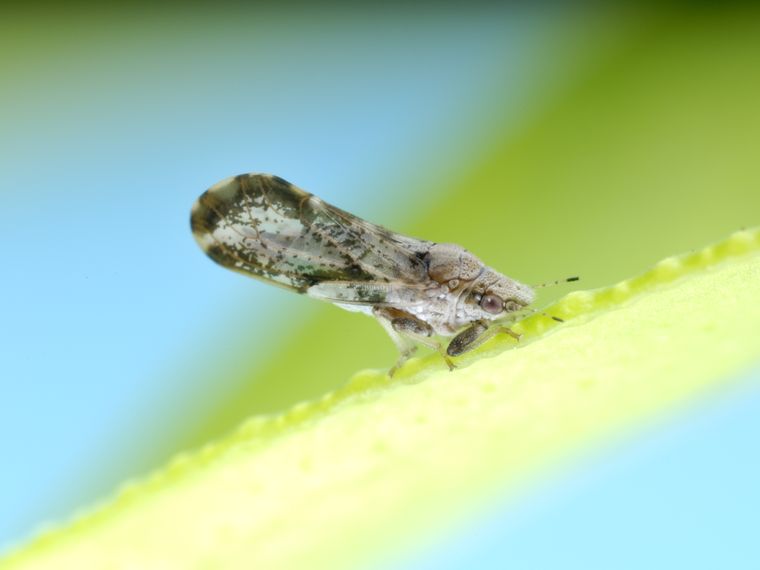
Quarantine pests: which are already in Greece and which are approaching
Ten quarantine pests have already been recorded in the country, two of them during 2026. What the law says, where each one stands, the life cycle and hosts of each, and why the traps caught the insects while the growers brought in the bacteria…
Liriomyza sativae: first record in Greece, life cycle, hosts and management
A Union quarantine pest, the fourth leafminer of the genus to reach the country. What was found, how the cycle closes in fifteen days, and where insecticide sprays fail…
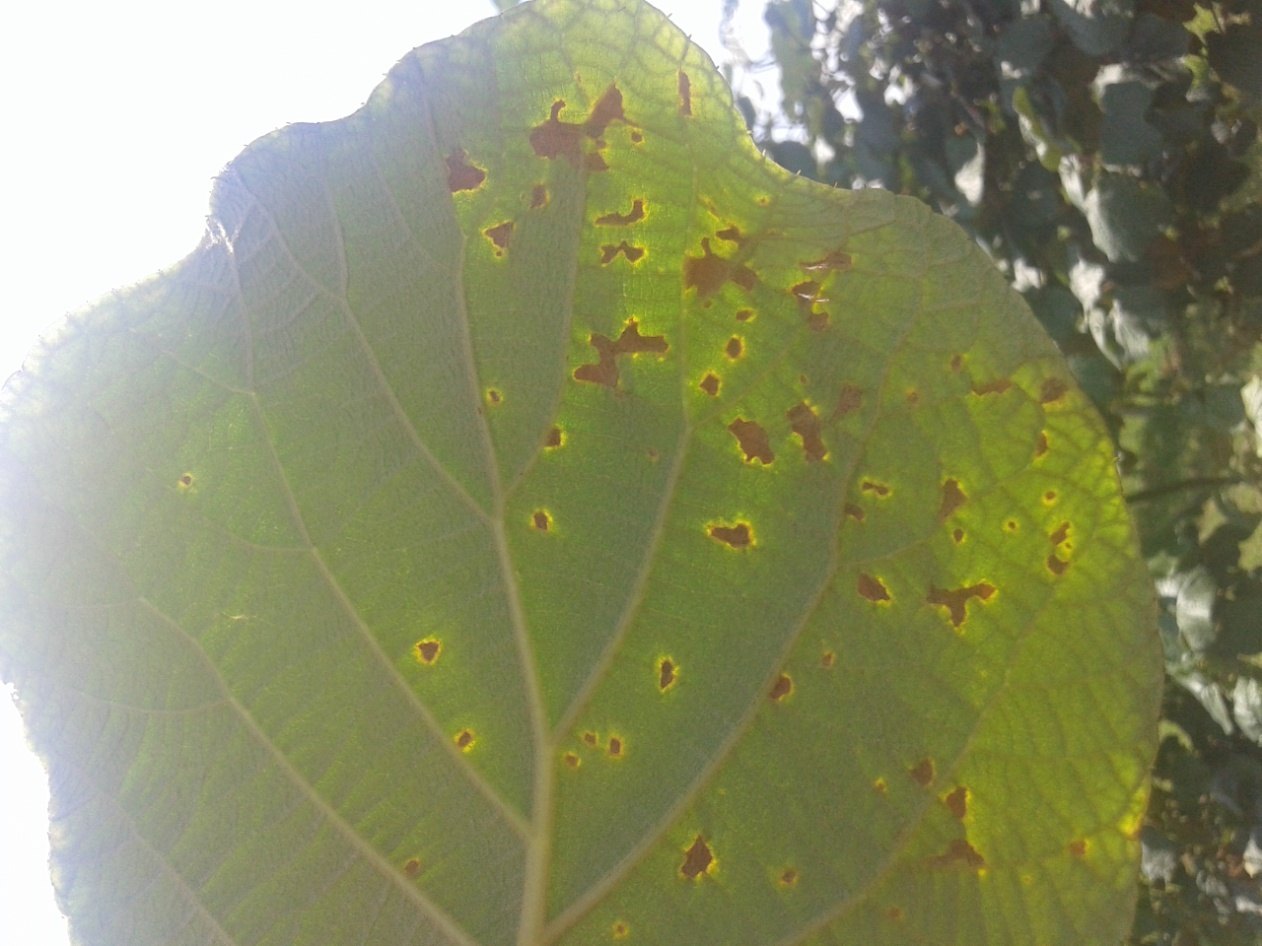
Copper nanoparticles for kiwifruit bacterial canker
A Chinese study compared three copper nanomaterials with a conventional bactericide. On the plate they needed concentrations at least sixty four times lower. On the plant the control efficacies fell into the same range…